
Come Together to Inspire, Interact, Influence, and Impact.

x
Notifications
Log Out? Are you sure you want to log out?
Log Out

Carol Swain & Claudine Gay: Harvard’s President’s Embarrassing History of Plagiarism

The president of Harvard University has had a terrible, awful, no good, very bad month! Claudine Gay’s polarizing congressional testimony kicked off what has become weeks of embarrassment for the most elite university in the world. 

People are questioning the Harvard brand (and that of many other elite institutions) in the weeks since Hamas’ brutal attack against innocent Jews. The Claudine Gays of this world have been exposed for their hypocrisy about racial justice in the face of blatant antisemitism. Her inability or unwillingness to defend the safety of Jewish students against violent rhetoric was a colossal failure and demonstration of poor leadership. 

I’d like to believe that there are more academics and thought leaders with a moral compass and the moral competence to meet the moment. One such individual is former Princeton and Vanderbilt professor Dr. Carol Swain. Ironically, Swain is one of Gay’s victims in another burgeoning scandal.

Plagiarising the work of others and passing it off as one’s own is a common error, but it’s neither excusable nor acceptable. When diving into Gay’s academic work, Manhattan Institute fellow Christopher Rufo and others unearthed evidence of plagiarism. We know now that her career is littered with examples of bad judgment at moments when it counts. 

The university swatted down the allegations as just “a few instances of inadequate citation.” However, as of January 1st, the number of plagiarized passages in Claudine Gay’s academic work is approaching 50!

Even the bastions of liberal intellectualism—The Atlantic, Washington Post, New York Times—have abandoned her:

Damage from Gay’s past plagiarism is not just limited to Harvard’s brand but to the work of those she ripped off.

Dr. Carol Swain, now a senior fellow at the Institute for Faith and Culture and a co-author of “The Adversity of Diversity: How the Supreme Court’s Decision to Remove Race from College Admissions Criteria will Doom Diversity Programs,” but formerly a tenured professor at elite colleges, has a tremendous personal story. Her extensive and lauded work on race was a victim of Gay’s plagiarism as she lifted whole passages without attribution.

As Swain wrote in the Wall Street Journal recently,

Ms. Gay’s damage to me is aggravated because her early work was in the area where my research is considered seminal. Her scholarship on black congressional representation, electoral districting and descriptive representation builds on terrain where I plowed the ground.

… Ms. Gay ignored the substantive importance of my research, which she should have acknowledged and engaged. A single citation or two wouldn’t usually be considered intellectually honest.

When scholars aren’t cited adequately or their work is ignored, it harms them because academic stature is determined by how often other researchers cite your work. Ms. Gay had no problem riding on the coattails of people whose work she used without proper attribution…

Dr. Swain wasn’t the only one. 

Gay’s behavior didn’t just stop at plagiarism. Harvard Law School alumnus and form law professor, W. F. Twyman, Jr., wrote in Newsweek, 

Did you know that Claudine Gay during her Harvard career has repeatedly targeted and disrupted the careers of prominent Black male professors?

As he laid out two prominent cases of her destroying the careers of black academics at Harvard, it’s apparent that she does.

Gay is a product of some of what’s wrong with academia today: relaxed standards, lowered expectations, a lack of moral clarity, and no accountability for wrongdoing. 

Tune in as we talk live with Dr. Carol Swain about the race-driven rot in higher ed on Tuesday, Feb 6, 2024. Register Here.

What The Federal Government’s New Year’s Resolutions Should Be

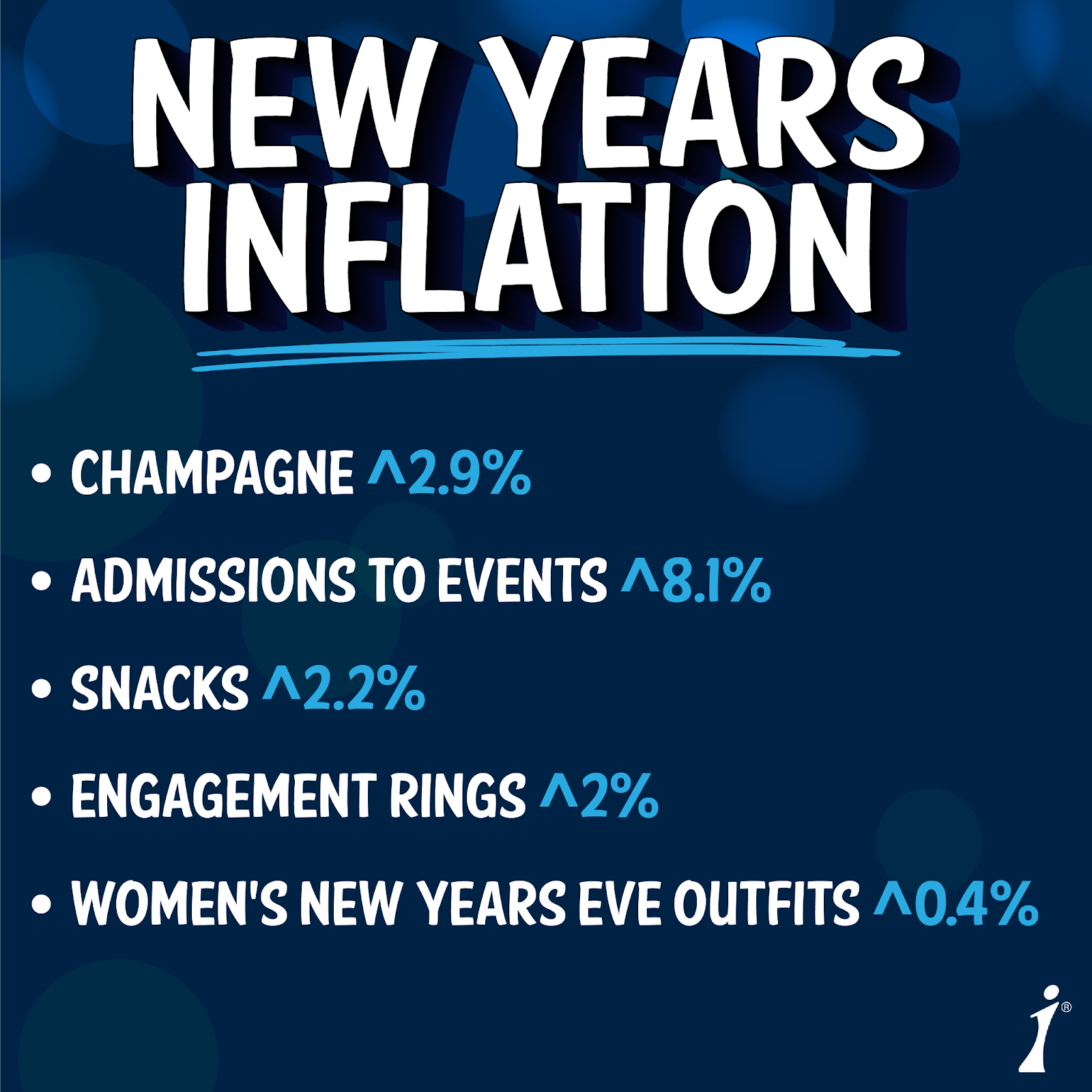
Heading into 2024, consumers are expected to spend more on certain items than last year to ring in the new year. 

According to the Consumer Price Index for All Urban Consumers (CPI-U), champagne for New Year’s toasts is 2.9% higher than last year. Admissions to events for celebrating the coming of 2024 increased by 8.1%. Appetizers and snacks for New Year’s parties cost 2.2% more. Women have to spend 0.4% more on outfits for parties. The price of engagement rings has gone up 2%.  

Thankfully, traveling back from the holidays has decreased, 12.1% by plane and 8.9% by car, but this only after high increases last year.      

Those who make New Year’s resolutions to join a gym or pick up a new recreational hobby will dish out 4.8% more than last year.

These increases in prices have led to consumer distrust and worry. Going into the New Year, 31% of adults say that inflation is “their top financial stressor.” Inflation not only affects everyday expenses, but it also impacts individuals’ and households’ ability to pay student loans, other debt, rent, and mortgages and to save for retirement. A recent survey found that 85% of Americans with a financial resolution for the new year believe inflation will make it difficult for them to accomplish it compared to 81% last year.   

Now, most Americans consider economic issues an important consideration in their voting choices. 62% of young adults pick economic issues over social issues in determining their vote with 93% saying the economy is “only fair” or “poor.”

Rising prices and low consumer satisfaction should spur the federal government to make some New Year’s resolutions of its own. Decreasing federal spending, lowering taxes on Americans and small businesses, reducing regulations, and protecting independent contracting would be a good start.

Best & Worst Policies Of 2023

Best & Worst Policies of 2023

As 2023 draws to a close, we take a moment to review the best and worst policies from Washington to state capitals that impact women’s freedom and choices in the labor force as well as the entrepreneurial spirit of America.

Best:

States Dropped College Requirements For Public Jobs
Over a dozen red and blue states have eliminated degree requirements and sent a powerful message that a degree should not hold qualified workers back from ample opportunities. Pennsylvania, Florida, and Georgia jumped on the bandwagon. 

Worst:

There is no shortage of bad ideas. Here are some we engaged with this year:

Looking to fund the costly $1.8 trillion American Rescue Plan Act (ARPA), Democrats lowered the previous threshold of at least 200 transactions totaling $20,000 or more to just $600. There is no transaction minimum, so a person could be one used treadmill away from new red tape and tax headaches.

Another example of unconstitutional administrative overreach by a Biden federal agency that would threaten the competitiveness and intellectual property of employers nationwide.

The PRO Act is neither pro-worker nor pro-woman, it’s just pro-union. Like AB5, it will hurt the freedoms and flexibility that today’s workers enjoy.

The Digital Markets Act (DMA) is a worrisome antitrust bill that straddles Big Tech companies such as Apple, Meta, Amazon, Microsoft, and Google with many new limits on their ability to execute core functions. By targeting U.S. companies, new foreign regulations have implications for domestic markets. Those impacts may work against your wallet and your business.

State-level Crackdowns on Worker Freedom

Rate Caps in Lending
Federal lawmakers just introduced the Predatory Lending Elimination Act, limiting the interest rates that certain lenders can charge veterans and all consumers to a 36% annual percentage rate. This will make it more difficult for Americans, particularly subprime borrowers who depend on short-term, small-dollar loans to gain access to credit. States tell the tale:

Bottom Line

The government’s role is to knock down barriers to opportunity, respect the rights of individuals, and ensure that the free enterprise system can operate freely. Many policies are advancing those goals, but unfortunately many more work against them. 

Here’s to another year of advocating for good policies and against the bad ones out of Washington and state capitols across the country. 

‘Home Alone’ Movie Shows Depressing Grocery Inflation  

Christmas Movie Star Paid $20 in 1990, Would Pay $54 Today

Inflation is the holiday grinch against our 401ks and charitable giving.

Now we see how much inflation hits our groceries through an illustrative look at the iconic 1990 movie “Home Alone.”

USA Today’s Sara Chernikoff sets the stage:

“‘Home Alone’ fans are reminiscing about lower grocery bills after a TikTok video pointed out how much Kevin McCallister spent on his solo shopping trip in 1990 versus what it would cost today.

The film follows the antics of the young boy, played by Macaulay Culkin, as he is accidentally left behind by his parents who jet off to Paris for Christmas.

As the fictional 8-year-old is left to fend for himself, he makes a trip to the local grocery store to pick up some food, toiletries and household necessities.

His bill comes out to about $20. One TikToker estimated that Culkin would spend close to $70 on the same grocery haul if the goods were purchased this year from Target, an increase of 250%.

In the film, Kevin buys his groceries at the family-owned supermarket called Rockford Schnucks, located in Illinois.

He picks up a half-gallon of milk, half-gallon of orange juice, TV dinner, a loaf of Wonderbread, frozen mac and cheese, liquid detergent, saran wrap, a bag of toy soldiers, Snuggle dryer sheets and toilet paper. McCallister uses a dollar-off coupon for a grand total of $19.83.

According to the Schnucks grocery store’s website, here’s how much Kevin’s groceries cost today:”

“Half a gallon of milk: $1.71
Half a gallon of OJ: $3.99
Butternut large white bread: $2.79 (Wonderbread not available)
TV dinner: $4.49 (Stouffer’s classic meatloaf frozen meal)
Frozen mac and cheese: $1.49
Tide liquid detergent: $12.99
Saran wrap: $3.39
Snuggle dryer sheets: $2.94
Toilet paper: $7.99
Toy soldiers (not available so Amazon price listed): $9.99″

“Kevin would have spent a grand total of $54.94 (with Illinois sales tax) in 2023 or $53.94 with his dollar off coupon.“

Thanks to the inflation grinch, increased prices are not only hitting consumers, they’re also hitting small businesses, like the family-owned grocery store in “Home Alone.” Goldman Sachs reports that despite some initial reports that consumer spending is up this holiday season, small business owners are being left out in the cold, according to a December 1-8 survey of 337 retail small business owners from Goldman Sachs 10,000 Small Businesses Voices. 

Goldman Sachs reported that 77% said they aren’t seeing an increase in holiday sales this season, and 55% say their profit margins are down this year—a troubling sign during a make-or-break shopping season. 

While Federal Reserve data shows inflation slowing, the pressures continue hurting small business owners. On a personal level, 70% of small business owners said the state of the economy and their financial outlook was negatively impacting their own household’s purchasing power and personal spending plans for their families this holiday season. Eighty-two percent of small business owners said they have been forced to raise prices in the past year, and 66% said they’re finding it difficult to absorb inflationary pressures and keep prices low.

When asked what they attribute the slowdown to, 67% said consumers seemed to have less disposable income, and 67% said the economy is tougher in 2023. Thirty-two percent said they were unable to compete with discounts offered by larger companies, and another 31% said more consumers were shopping online, making it harder to reach them. 

Let’s not forget the genesis of the elevated inflation small businesses and individuals are battling with. Excessive, reckless federal spending on the Biden agenda in 2021 skyrocketed inflation that was around 1-2% before President Biden took office. It will take time for prices to return to their pre-Biden levels—if they ever will.   

So this holiday if you’re reclining in your comfy chair watching the McCallister family drama unfold, know that you’re watching a time capsule when life was simpler due to lower prices and less inflation. And know that you’re not alone in holiday wishing for policy solutions that make life more affordable for everyone.

Get Uncle Sam Out of My Home!

Listen to Gabby Hoffman, Director of the Center for Energy and Conservation at Independent Women’s Forum, and Julie Gunlock, Director of Independent Women’s Network, discuss IWN’s newest action center, Hands Off My House. They talk about the over 15 proposed and finalized household appliance rules that affect every area of your house and could increase costs by over $9,000 for the average family. Check out the interactive graphic on the action center, and learn how you can get engaged and speak out!

A Federal Bill That Can Help Mitigate the Damage to Policing and Public Safety

The public is feeling the effects of a nationwide police staffing crisis. Crime has spiked across the country in several major crime categories. Police officers have largely retreated from proactive policing, a tool that has been demonstrated to prevent crime. Crimes are going unsolved, leaving victims without justice.

Wait times for service calls have gotten longer, and not just for fender benders and nuisance calls. The Chicago Police Department, for example, was unable to respond to 52% of high-priority service calls as recently as 2021, data journalists found. The Department’s staffing woes have only worsened since this report was issued.

Small and mid-sized cities aren’t faring much better. Public records show that police departments in cities like New Orleans, Nashville, Houston, Detroit, Seattle, and Boise are experiencing staffing crunches and taking longer for police to respond to calls.

Given the urgency of our public safety situation, you’d think there would be a clarion call from
legislators to craft meaningful solutions. Overall, the response has been underwhelming.

Democratic proposals center on generating federal grants to attract and train new police recruits. Money isn’t at the heart of this staffing crisis, though. Overt hostility displayed by members of the public and select units of government, zealous prosecutions of police officers, failure to prosecute attacks on police, and attempts to eliminate qualified immunity are some of the primary factors compelling police officers to leave the profession en masse.

Though Republicans have been slow to introduce meaningful solutions, there have been some glimmers of hope. The Florida legislature, for example, passed a sweeping anti-crime, pro-police bill in 2021, propelling it as a model law-and-order state.

One encouraging bill for consideration in the U.S. House is the Protect & Serve Act (H.R. 743), introduced by Rep. John Rutherford earlier this year. It would create a new federal crime category and minimal sentencing requirements for knowingly assaulting a police officer. At a time when attacks on law enforcement have increased, this bill fills a critical need.

With a current roster of 90 co-sponsors in the House and bipartisan support, the Protect & Serve Act is gaining the most momentum of all the bills in this category – and it has the most realistic chance of passing.

This bill isn’t a panacea, and it will take more than a signature to reverse all the damage that’s been done to policing. It does, however, send an unequivocal message that attacks on officers of the law won’t be tolerated. When police officers are safe and supported, they’re in a better position to keep us free from harm and to protect our civil liberties.

Members of Congress need to hear from all of us who care about public safety, police officers, and the rule of law. It’s why I ask that you please consider urging your congressperson to co-sponsor the Protect & Serve Act. If you’re short on time, the Fraternal Order of Police has provided a convenient automated form, open for all to sign.

Paula Fitzsimmons is an investing IWN member based in Wisconsin. She’s founder of For the Blue, a platform advocating for rank-and-file officers. Paula also serves as legislative director for the National Police Association.