

What is TikTok? TikTok is a short-form video sharing social media platform with nearly 700 million active users and grow...

Twitter is a social media platform where individuals can share information with anyone in the world. By setting up an account, you can “follow” people who share your interests and concerns, news accounts, organizations, companies, political figures, and other entities that matter to you. Twitter can be used to share personal stories, but it is ideal for getting your message out nationally and broadening your coalition. Twitter is also useful for finding media figures who might be interested in your issue or story. You can also use Twitter to find allies and those opposed to particular policies.
Rules for Posting: The content has to meet Twitter’s rules.
Retweeting: You can retweet articles, comments, infographics, and many other things you agree with from other trusted accounts. You simply hit the retweet ???? button on the bottom of the post.
Retweeting with Comment: This can be fun. You can retweet with a comment agreeing, supporting, or disagreeing with the poster’s original tweet. You can also insert a gif in your retweets. This is a dynamic image file that is used to show a reaction.
Post Your Own Tweet: Posting your own tweet is simply a matter of posting your own thoughts in 280 characters or less. That seems like a lot, but considering this paragraph that you are reading is 280 characters, you might find it hard to fit all your thoughts into a small space!
Using Hashtags: Hashtags started in 2007. They are most often used on Twitter although some other social media platforms use them as well.
Hashtag: It is the pound or hash symbol (#) followed by a word or multiple words (with no spaces). Example #parenting or #HappyValentinesDay or #Vote2020. Hashtags are used to help people find content on social media about a specific topic.
If you want to see content about parenting, you could search for #parenting or #parents. If you wanted to find content about a particular political issue, you could simply put the hash sign then followed by the political issue. Example: #GunControl or #2A (which stands for Second Amendment), #OpenSchools, #VAWA for the Violence Against Women Act, or #ERA for the Equal Rights Amendment. You can even search for specific legislative bills by putting the bill number in with the hash number—#HR1523, #S504.
1. Hashtags make your content easily searchable, which makes it easier for people to find your content.
2. Hashtags make it easier for the media to find you as a potential source for a story. Reporters often search hashtags to find people to interview for stories. So this is a great way to reach out to the media without even trying.
3. Hashtags can help you find allies and grow your community. People often follow hashtags to find like-minded people or allies in fighting a particular legislative proposal.
4. Hashtags can be used to bring humor or gently poke fun. It’s always great to show a little humor, humility, and appreciation; and it’s a way to give your account or group’s account a personality.
Tagging People: Make sure you tag people in Tweets by using the @ symbol and then typing in their Twitter handle (or name). For instance, IW has a Twitter account under @IWF and @IWV. An individual’s name might be their Twitter handle as in @JaneDoe or they might make up a name, such as @FreedomGal. Make sure you tag the accounts that might be interested in your tweet. This will help your message get a broader audience.
Like a Tweet: This is the most non-confrontational approach. By liking a tweet, you’re simply telling the poster that you approve of the tweet.
Examples of Tweets:

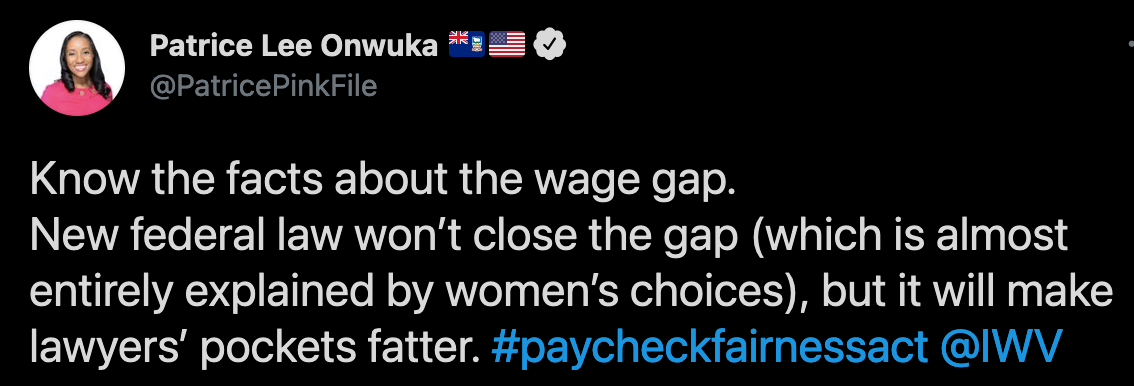
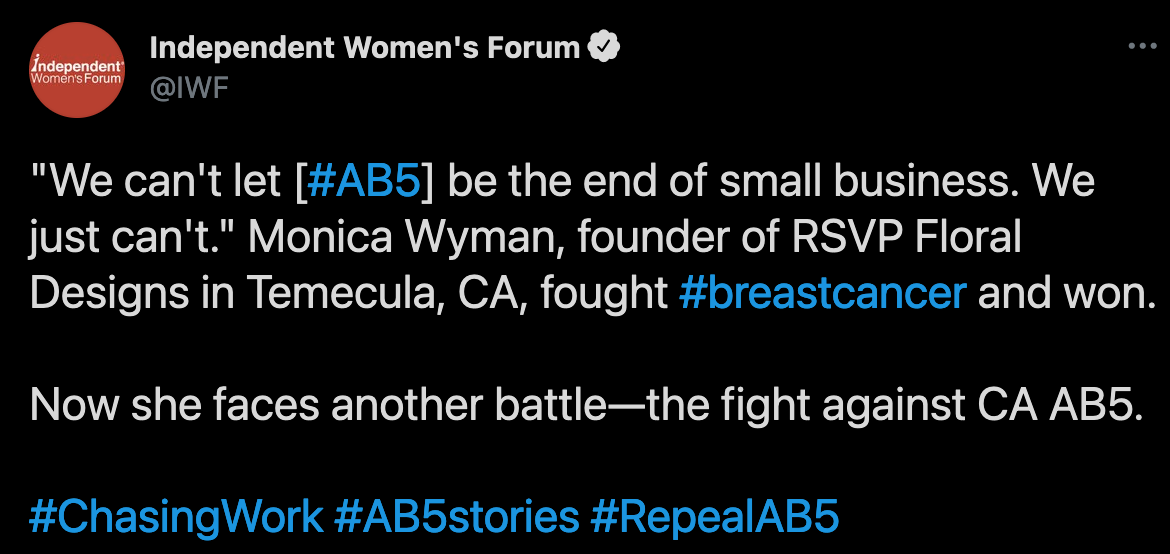
Kelsey Bolar: @kelseybolar
Jennifer Braceras: @J_Braceras
Tammy Bruce: @HeyTammyBruce
Julie Gunlock: @Jgunlock
Hadley Heath Manning: @HadleyHeath
Heather Higgins: @TheHRH
Carrie Lukas: @CarrieLukas
Heather Madden: @IWF_Heather
Patrice Onwuka: @PatricePinkfile
Inez Stepman: @InezFeltscher
Charlotte Whelan: @cc_whelan19
Elisha Maldonado: @elishamaldonado
Naomi Schaefer Riley: @NaomiSRiley
Vicki Alger: @vickiealgerphd
Lisa Boothe: @LisaMarieBoothe
Victoria Coley: @VictoriaRColey


