Come Together to Inspire, Interact, Influence, and Impact.

x
Notifications
Log Out? Are you sure you want to log out?
Log Out

What The Federal Government’s New Year’s Resolutions Should Be

Heading into 2024, consumers are expected to spend more on certain items than last year to ring in the new year. 

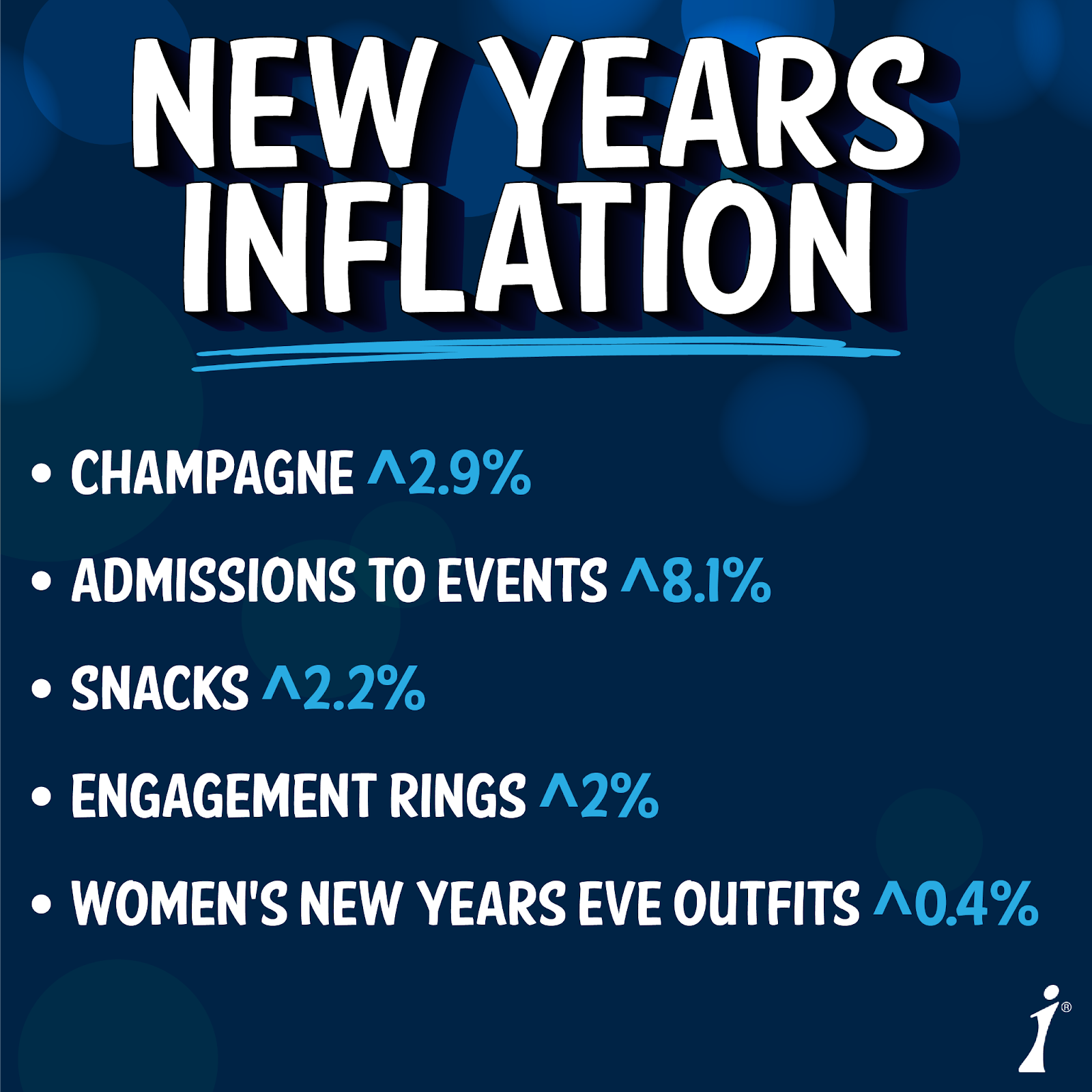
According to the Consumer Price Index for All Urban Consumers (CPI-U), champagne for New Year’s toasts is 2.9% higher than last year. Admissions to events for celebrating the coming of 2024 increased by 8.1%. Appetizers and snacks for New Year’s parties cost 2.2% more. Women have to spend 0.4% more on outfits for parties. The price of engagement rings has gone up 2%.  

Thankfully, traveling back from the holidays has decreased, 12.1% by plane and 8.9% by car, but this only after high increases last year.      

Those who make New Year’s resolutions to join a gym or pick up a new recreational hobby will dish out 4.8% more than last year.

These increases in prices have led to consumer distrust and worry. Going into the New Year, 31% of adults say that inflation is “their top financial stressor.” Inflation not only affects everyday expenses, but it also impacts individuals’ and households’ ability to pay student loans, other debt, rent, and mortgages and to save for retirement. A recent survey found that 85% of Americans with a financial resolution for the new year believe inflation will make it difficult for them to accomplish it compared to 81% last year.   

Now, most Americans consider economic issues an important consideration in their voting choices. 62% of young adults pick economic issues over social issues in determining their vote with 93% saying the economy is “only fair” or “poor.”

Rising prices and low consumer satisfaction should spur the federal government to make some New Year’s resolutions of its own. Decreasing federal spending, lowering taxes on Americans and small businesses, reducing regulations, and protecting independent contracting would be a good start.

Best & Worst Policies Of 2023

Best & Worst Policies of 2023

As 2023 draws to a close, we take a moment to review the best and worst policies from Washington to state capitals that impact women’s freedom and choices in the labor force as well as the entrepreneurial spirit of America.

Best:

States Dropped College Requirements For Public Jobs
Over a dozen red and blue states have eliminated degree requirements and sent a powerful message that a degree should not hold qualified workers back from ample opportunities. PennsylvaniaFlorida, and Georgia jumped on the bandwagon. 

Worst:

There is no shortage of bad ideas. Here are some we engaged with this year:

Looking to fund the costly $1.8 trillion American Rescue Plan Act (ARPA), Democrats lowered the previous threshold of at least 200 transactions totaling $20,000 or more to just $600. There is no transaction minimum, so a person could be one used treadmill away from new red tape and tax headaches.

Another example of unconstitutional administrative overreach by a Biden federal agency that would threaten the competitiveness and intellectual property of employers nationwide.

The PRO Act is neither pro-worker nor pro-woman, it’s just pro-union. Like AB5, it will hurt the freedoms and flexibility that today’s workers enjoy.

The Digital Markets Act (DMA) is a worrisome antitrust bill that straddles Big Tech companies such as Apple, Meta, Amazon, Microsoft, and Google with many new limits on their ability to execute core functions. By targeting U.S. companies, new foreign regulations have implications for domestic markets. Those impacts may work against your wallet and your business.

State-level Crackdowns on Worker Freedom

Rate Caps in Lending
Federal lawmakers just introduced the Predatory Lending Elimination Act, limiting the interest rates that certain lenders can charge veterans and all consumers to a 36% annual percentage rate. This will make it more difficult for Americans, particularly subprime borrowers who depend on short-term, small-dollar loans to gain access to credit. States tell the tale:

Bottom Line

The government’s role is to knock down barriers to opportunity, respect the rights of individuals, and ensure that the free enterprise system can operate freely. Many policies are advancing those goals, but unfortunately many more work against them. 

Here’s to another year of advocating for good policies and against the bad ones out of Washington and state capitols across the country. 

‘Home Alone’ Movie Shows Depressing Grocery Inflation  

Christmas Movie Star Paid $20 in 1990, Would Pay $54 Today

Inflation is the holiday grinch against our 401ks and charitable giving.

Now we see how much inflation hits our groceries through an illustrative look at the iconic 1990 movie “Home Alone.”

USA Today’s Sara Chernikoff sets the stage:

“‘Home Alone’ fans are reminiscing about lower grocery bills after a TikTok video pointed out how much Kevin McCallister spent on his solo shopping trip in 1990 versus what it would cost today.

The film follows the antics of the young boy, played by Macaulay Culkin, as he is accidentally left behind by his parents who jet off to Paris for Christmas.

As the fictional 8-year-old is left to fend for himself, he makes a trip to the local grocery store to pick up some food, toiletries and household necessities.

His bill comes out to about $20. One TikToker estimated that Culkin would spend close to $70 on the same grocery haul if the goods were purchased this year from Target, an increase of 250%.

In the film, Kevin buys his groceries at the family-owned supermarket called Rockford Schnucks, located in Illinois.

He picks up a half-gallon of milk, half-gallon of orange juice, TV dinner, a loaf of Wonderbread, frozen mac and cheese, liquid detergent, saran wrap, a bag of toy soldiers, Snuggle dryer sheets and toilet paper. McCallister uses a dollar-off coupon for a grand total of $19.83.

According to the Schnucks grocery store’s website, here’s how much Kevin’s groceries cost today:”

“Half a gallon of milk: $1.71
Half a gallon of OJ: $3.99
Butternut large white bread: $2.79 (Wonderbread not available)
TV dinner: $4.49 (Stouffer’s classic meatloaf frozen meal)
Frozen mac and cheese: $1.49
Tide liquid detergent: $12.99
Saran wrap: $3.39
Snuggle dryer sheets: $2.94
Toilet paper: $7.99
Toy soldiers (not available so Amazon price listed): $9.99″

Kevin would have spent a grand total of $54.94 (with Illinois sales tax) in 2023 or $53.94 with his dollar off coupon.

Thanks to the inflation grinch, increased prices are not only hitting consumers, they’re also hitting small businesses, like the family-owned grocery store in “Home Alone.” Goldman Sachs reports that despite some initial reports that consumer spending is up this holiday season, small business owners are being left out in the cold, according to a December 1-8 survey of 337 retail small business owners from Goldman Sachs 10,000 Small Businesses Voices

Goldman Sachs reported that 77% said they aren’t seeing an increase in holiday sales this season, and 55% say their profit margins are down this year—a troubling sign during a make-or-break shopping season. 

While Federal Reserve data shows inflation slowing, the pressures continue hurting small business owners. On a personal level, 70% of small business owners said the state of the economy and their financial outlook was negatively impacting their own household’s purchasing power and personal spending plans for their families this holiday season. Eighty-two percent of small business owners said they have been forced to raise prices in the past year, and 66% said they’re finding it difficult to absorb inflationary pressures and keep prices low.

When asked what they attribute the slowdown to, 67% said consumers seemed to have less disposable income, and 67% said the economy is tougher in 2023. Thirty-two percent said they were unable to compete with discounts offered by larger companies, and another 31% said more consumers were shopping online, making it harder to reach them. 

Let’s not forget the genesis of the elevated inflation small businesses and individuals are battling with. Excessive, reckless federal spending on the Biden agenda in 2021 skyrocketed inflation that was around 1-2% before President Biden took office. It will take time for prices to return to their pre-Biden levels—if they ever will.   

So this holiday if you’re reclining in your comfy chair watching the McCallister family drama unfold, know that you’re watching a time capsule when life was simpler due to lower prices and less inflation. And know that you’re not alone in holiday wishing for policy solutions that make life more affordable for everyone.

The Twelve Days Of Christmas Just Got More Expensive

Everyone knows the classic song, “The Twelve Days of Christmas.” But if you’re thinking of making any grand gestures based on the song (à la Andy Bernard in “The Office”), you might want to think again. 

Each year, PNC Bank calculates the prices of the 12 gifts (with their repetition!); and despite any claims to the contrary from the Biden White House, prices are still rising. As PNC explains, the “true cost of Christmas in song” amounts to a staggering $201,972.66 (+2.5%). “This represents the total cost of all the gifts bestowed by True Love when you count each repetition of the song, totaling 364 presents. Spreading cheer throughout the year in 2023 costs 2.5% more than in 2022.” 

If you’re as amazed as I am that these gifts cost more than 200K, you’ll have to read the breakdown: 

On the first day of Christmas, my true love gave to me… a partridge in a pear treeWhile the price of the bird itself remained steady from 2022, the pear tree took a jump (15%). This isn’t surprising given rising housing costs throughout the country but this elegant gift will cost you $319.

On the second day of Christmas, my true love gave to me… two turtle dovesTurtle dove prices took flight this year, rising 25% from last year to $750. But their calm and beautiful song is just as sweet, even if remarkably more expensive than the year prior.

On the third day of Christmas, my true love gave to me… three French hensFrench hens are your bargain birds this year, only rising 3.5% and costing $330. Not sure what makes them different from normal chickens except for their heritage and perhaps some fun accents. 

On the fourth day of Christmas, my true love gave to me… four calling birds: Your four calling birds aren’t cheap (except for maybe the cheeps they make), but at least they’re the same price as last year, coming in it at just under $600. And actually, they’ve been the same price for quite a number of years, maybe because no one knows quite exactly what they are (does any bird that sings count?). 

On the fifth day of Christmas, my true love gave to me…five golden ringsIn a surprising twist, this gift rings in at the same amount as last year. While certainly still expensive at $1,245, this was the first time in more than five years that the price of gold stayed the same.

On the sixth day of Christmas, my true love gave to me…six geese-a-laying: Your geese can’t measure up to gold rings but they’re looking more and more like the golden goose of fairy tales, with an unprecedented rise in price since 2018 of almost $500. This year, their price rose 8.3% to a total of $780.

On the seventh day of Christmas, my true love gave to me…seven swans-a-swimmingDespite their beauty and previously volatile price, swimming swans did not get any more expensive. But unfortunately for your romantic gift-giver, they still total a whopping $13,125. 

On the eighth day of Christmas, my true love gave to me… eight maids-a-milking: You’d think that hiring maids to milk constantly would be a little more pricey, but hiring vs. buying really helps a person out here. Your eight maids are making the federal minimum wage according to PNC, so their price stayed the same (along with the minimum wage) and rang in at $58. 

On the ninth day of Christmas, my true love gave to me… nine ladies dancingAs many of you may have noticed in the last year, a lot of entertainment has been rising in cost. But the nine ladies dancing price stayed the same from last year (which rose 10% from the year before), totaling $8,308. 

On the tenth day of Christmas, my true love gave to me… ten lords-a-leaping: I’m not really sure why anyone would want to see ten fancy men leaping about but these fine gentlemen are not only the most expensive item, coming in at $14,539, their price increased 4% from the year before. 

On the eleventh day of Christmas, my true love gave to me… eleven pipers pipingIf you’re looking for some sweet tunes, you’ll be paying through the nose for it—or at least the pipe. The cost of your pipers rose 6.2%, raising their fee to $3,207. Still nowhere near the leaping lords so it’s probably a better deal all around.

On the twelfth day of Christmas, my true love gave to me… twelve drummers drummingFor that grand finale, you can’t skip the drumline. Your drummers, similar to the pipers, got a bit more expensive, rising 6.2% to a total of $3,468. But let’s be honest, out of a series of gifts that involves a remarkable amount of birds, young women milking cows, and leaping men, a drumline is one of the cooler gifts to receive. 

Inflation is driven by excessive federal spending to the tune of over $2 trillion in 2021. The Biden administration is downplaying how ill-advised federal policy drove prices higher and their solution—the Inflation Reduction Act—was no solution at all as it doesn’t reduce inflation as it was intended to. 

Let’s hope that inflation recedes across all categories and that next Christmas, gift-giving for your True Love will be a little less costly.

Something to Consider with Holiday Giving

Just a few more days until Christmas if you can believe it! This time of year is so full of love and generosity. Charities and those in need see the b...

Activate your membership to gain access to IWN content!

Unlock members-only content, resources and events by activating your Free Pass or gain access to additional features by selecting a monthly membership package. Join Now Already a member? Login

The Grinch Of Inflation

‘Tis the season to be jolly, but for many consumers, the festive cheer comes with an unexpected companion—Christmastime inflation. As the holiday season approaches, the cost of celebrating continues to rise.  

The cost of everyday Christmas items has risen. Cookies for Santa witnessed a 3.7% year-over-year increase, fruit cake spiked by 3.8%, Christmas trees by 3.3%, and wrapping paper by 2.3%.

The PNC Christmas Price Index reveals a 2.7% rise in the annual cost of the 12 days of Christmas this year. The cumulative cost for a dozen gifts featured in the classic Carol’s concluding verse alone now amounts to a staggering $46,730.

A recent Bankrate survey exposed that 40% of Americans plan to scale back their holiday shopping due to inflationary concerns. Amidst the rising cost of inflation, four in five individuals are actively adopting money-saving strategies this year, including a keen eye for coupons and sales.

In light of these challenges, 84% of respondents in the Bankrate survey expressed their intention to be frugal this year.

Among survey respondents, 21% specified they would opt for gifts from more affordable brands. 

Other methods to save: 17% of participants plan to create more do-it-yourself (DIY) gifts, while 11% stated they would give pre-owned or secondhand items as presents.

Furthermore, 27% of respondents stated they intend to begin holiday shopping earlier than in previous years.

The annual increase in the PNC Christmas Price Index and the surge in prices for traditional items highlight the financial strain on consumers. 

Some studies suggest that the impact of record-high inflation might extend beyond immediate financial constraints, potentially leaving younger Americans such as Gen Z psychologically scarred

It’s worth remembering that high inflation did not emerge out of thin air. Massive, excessive federal spending—particularly in 2021 through the American Rescue Plan—at a time when the economy was reopening (along with supply-chain disruptions) sparked inflation. Washington’s reckless spending is an even bigger Grinch than inflation this Christmas.