Come Together to Inspire, Interact, Influence, and Impact.

x
Notifications
Log Out? Are you sure you want to log out?
Log Out

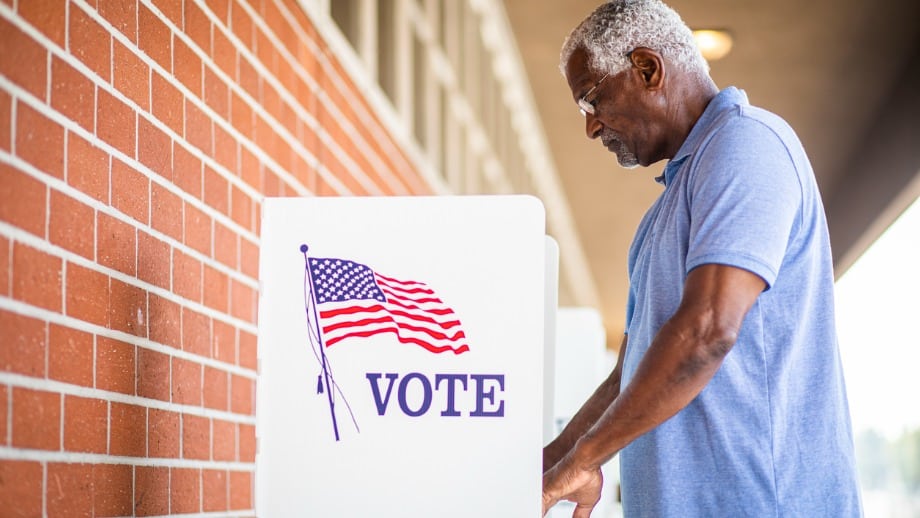
In 60 Seconds: H.R. 1 and Election Integrity

*PDF Download: In 60 Seconds – H.R. 1 and Election Integrity

Voting is a fundamental privilege of every American over the age of 18. Today, elections enable all citizens to make their voices heard at every level of government.

Unfortunately, the so-called “For the People Act,” or H.R. 1, threatens this privilege and undermines election security. Rather than empowering citizens, H.R.1 disenfranchises them.

Here’s the issue of election integrity in 60 seconds:

What’s at Stake

Voting is a fundamental privilege of every American over the age of 18. Today, elections
enable all citizens to make their voices heard at every level of government.

Unfortunately, the so-called “For the People Act,” or H.R. 1, threatens this privilege and
undermines election security. Rather than empowering citizens, H.R. 1 dilutes the power
of your vote.

H.R. 1 radically alters the way in which American elections are conducted. H.R. 1
undermines basic security measures, inviting fraud that may cancel out your vote.
Among other things, H.R. 1 nullifies state laws that require voter identification,
mandates automatic and same-day voter registration, and overrides state laws that
restrict the ability of individuals or groups to collect and submit large numbers of
ballots (i.e., ballot “harvesting”). It also prohibits states from enacting measures aimed
at removing from their registration rolls the names of people who are deceased or who
have moved out of the jurisdiction.

The Way Forward

To ensure that every citizen has an equal voice in politics, election procedures must
make voting both accessible and secure. The failure to ensure election integrity has
the potential to cancel out ballots, including those cast by black citizens who have
consistently turned out at high rates in recent elections compared to other racial and
ethnic groups.

We need to strengthen laws that protect voters, not get rid of them. We should make
voting as secure as other civic practices, such as accessing government buildings,
transportation systems, and education facilities. If we need identification (ID) to drive a
car, check out a library book, open a checking account, or purchase alcohol, it is even
more important that the person voting as you has to prove they are you before they vote.

Prohibiting voter ID requirements makes no sense and threatens our democracy.

Addressing Misperceptions

In 60 Seconds: The Electoral College

Activists who want to select our President the way we choose the winner of American Idol are waging an all-out assault on the U.S. electoral system.

Our Founding Fathers established the Electoral College system to help guard against factionalism and the passions of the moment. This system is enshrined in the U.S. Constitution, so eliminating the Electoral College requires a constitutional amendment.

Some Senators have introduced an amendment that would do just that. But because proposals to amend the Constitution are rarely successful, a well-financed and stealth organization is spearheading an effort to circumvent the amendment process and impose a national popular vote by legislative fiat.

Eliminating the Electoral College would damage our political system and the institution of the Presidency.

Here’s the issue of the Electoral College in 60 seconds: 

What’s at Stake:

Activists who want to select our President the way we choose the winner of American Idol are waging an all-out assault on the U.S. electoral system.

Our Founding Fathers established the Electoral College system to help guard against factionalism and the passions of the moment. This system is enshrined in the U.S. Constitution, so eliminating the Electoral College requires a constitutional amendment. Some Senators have introduced an amendment that would do just that. But because proposals to amend the Constitution are rarely successful, a well-financed and stealth organization is spearheading an effort to circumvent the amendment process and impose a national popular vote by legislative fiat.

Eliminating the Electoral College would damage our political system and the institution of the Presidency.

The Electoral College

  • Guards against the tyranny of the majority: Benjamin Franklin once described pure democracy as “two wolves and a sheep voting on what’s for lunch.” The Framers designed a government of checks and balances to protect the rights of political minorities. As with other aspects of our Constitution, our system for electing a President ensures that a majority of voters (or even a plurality) won’t run roughshod over the interests of voters in the political minority.
  • Encourages coalition-building: Because a candidate must win in various parts of the country to obtain a majority in the Electoral College, candidates have an incentive to build coalitions and appeal to a range of voters with different interests. This is critically important in a nation as large and diverse as ours.
  • Encourages finality and provides legitimacy: In the United States, the nationwide popular vote is often quite close, even when the outcome in the Electoral College is clear. A decisive Electoral College victory discourages the loser from litigating the outcome of the election and lends legitimacy to Presidents (such as Abraham Lincoln, John F. Kennedy, Richard M. Nixon, and Bill Clinton) who receive only a plurality of the nationwide vote.

Addressing Misconceptions

In 60 Seconds: H.R. 4 And Federal Pre-Clearance

*PDF Download: In 60 Seconds – Pre-Clearance

H.R. 4 requires certain states and local jurisdictions with “history of intentional voting discrimination” to obtain federal approval to make any changes to voting or election laws.

This proposal unconstitutionally threatens certain state’s abilities to dictate how they will hold elections, thereby taking the power away from voters.

Here’s the issue of Federal Pre-Clearance in 60 seconds:

What You Need To Know

The Voting Right Act:

  • prohibits election policies that deny or abridge the right to vote on account of race or color (Section 2); and
  • requires certain jurisdictions with a history of intentional voting discrimination to seek federal approval (“pre-clearance”) of any election-related changes (Section 5).

Shelby Cty. v. Holder:

  • held that Congress may not rely on 40-year-old data to justify requiring local jurisdictions to seek federal approval of changes to election-related rules.

H.R. 4:

  • establishes new criteria for determining which jurisdictions are required to pre-clear all election changes for the next ten years; and
  • requires every state and local jurisdiction in the entire country to seek federal approval before adopting certain practices, such as strong voter ID requirements.

Problems with H.R. 4

It’s an unconstitutional federal takeover

  • Pre-clearance is only constitutional if used as a temporary remedy for intentional discrimination.
  • The original pre-clearance formula was carefully calibrated to cover southern jurisdictions that used tests purposely to deny ballots to black citizens.
  • H.R. 4 widens the pre-clearance net to cover any and every jurisdiction that wants to strengthen voter ID rules or alter procedures for printing and distributing multilingual materials.

H.R. 4 is disconnected from reality

  • In 1965, intentional voting discrimination was frequent and widespread. Today, it is rare. And yet, H.R. 4 broadens and intensifies federal pre-clearnce rules.
  • Changing a polling location or failing to provide ballots in every possible language is not the same as deliberately preventing black citizens from voting.
  • Pre-clearance was supposed to be temporary. Today, the permanent prohibitions on voting discrimination provide ample remedies.

Addressing Misperceptions

In 60 Seconds: Voting Rights

*PDF Download: In 60 Seconds – Voting Rights

Every American should have the right to vote without fear of discrimination, and the federal government has an important role to play in enforcing those privileges.

However, federal attempts to protect voter’s rights actually takes the power away from local governments and citizens.

Here’s the issue of Voting Rights in 60 seconds:

General Principles

Voting rights are protected by the U.S. Constitution and by federal statute

  • The 15th Amendment prohibits the denial or abridgement of the right to vote “on account of race, color, or previous condition of servitude”
  • The Voting Rights Act prohibits discriminatory voting practices and provides strong federal enforcement mechanisms.

Under the U.S. Constitution, American elections are decentralized

  • As a matter of constitutional design, our elections are state-by-state contests that are administered locally.
  • This system provides important checks against corruption and fraud.

Only in extreme circumstances can the federal government intrude on local control of elections

  • The Voting Rights Act of 1965 was a unique exception to our decentralized voting system, made necessary by widespread, deliberate disfranchisement of blacks in the Jim Crow South.

The Voting Rights Act (VRA)

The Voting Rights Act of 1965

  • was passed to give blacks access to the ballot, which had been unconstitutionally denied them in parts of the country;
  • empowered the federal government to enforce voting rights nationwide;
  • and gave the feds temporary power to oversee voting changes in jurisdictions with a history of racist election practices.

Specific provisions

  • Section 2 permanently outlaws voting procedures that deny or abridge the vote on account of race or color;
  • Section 5 temporarily requires certain jurisdictions to get federal approval (“pre-clearance”) before making electoral changes;
  • Section 4 establishes criteria for determining which jurisdictions must seek Section 5 pre-clearance.

The way forward

  • The federal government has an important role to play in enforcing voting rights nationwide, but it should not micromanage local election procedures in jurisdictions with no recent history of voting discrimination.

Addressing Misperceptions

In 60 Seconds: Judicial Philosophy

*PDF Download: In 60 Seconds – Judicial Philosophy

Progressives want the Supreme Court to decide cases based on modern notions of fairness and social justice, rather than on the law as written. Because progressives view the Court as a super-legislature, rather than as a neutral arbiter of law, they seek nominees to the Court whom they believe are willing to legislate certain outcomes from the bench.

The president should nominate and the Senate should confirm only those candidates who possess a sound judicial philosophy.

Here’s the issue of judicial philosophy in 60 seconds:

What’s at Stake

Progressives want the Supreme Court to decide cases based on modern notions of fairness and social justice, rather than on the law as written. Because progressives view the Court as a super-legislature, rather than as a neutral arbiter of law, they seek nominees to the Court whom they believe are willing to legislate certain outcomes from the bench.

It is not the job of the Court to set public policy or to create new rights and remedies. Those jobs belong to the political branches of government, which are accountable to the people.

Nor is it the job of the Court to rubber-stamp popular laws that conflict with the Constitution. An unelected justice who is unwilling to enforce the limits of our governing charter puts all of our freedoms at risk.

It is, therefore, critically important that any nominee to the Supreme Court understand the proper role of the judiciary in our democracy.

Qualifications for a Supreme Court Justice

Supreme Court nominees should, of course, possess strong academic and legal credentials. But resumes are only part of the equation. From a diverse pool of many qualified candidates, the president should nominate and the Senate should confirm only those candidates who possess a sound judicial philosophy.

Nominees to the Supreme Court must demonstrate a commitment to:

  • enforcing the Constitution as written and
  • applying statutes passed by Congress consistent with their original public meaning

Even when doing so leads to outcomes with which they personally disagree.

A justice who fails to anchor her decisions to constitutional or statutory text is legally adrift, guided only by politics and her own personal morals and worldview.

Addressing Misperceptions

In 60 Seconds: Diversity and the Supreme Court

*PDF Download: In 60 Seconds – Diversity & the Supreme Court

The Supreme Court search process should be inclusive, not exclusive. Although the role of a judge is apolitical, the process of selecting a nominee to the Supreme Court is a political process in which factors other than qualifications inevitably play a role.

In searching for a Supreme Court nominee, a president should cast a wide net, considering qualified candidates from all walks of life. But, in so doing, a president must not exclude from consideration candidates with certain demographic profiles.

From a diverse pool of qualified candidates, the most important consideration is judicial philosophy.

Here’s the issue of diversity and the Supreme Court in 60 seconds:

What You Should Know

The Supreme Court search process should be inclusive, not exclusive. 

  • Although the role of a judge is apolitical, the process of selecting a nominee to the Supreme Court is a political process in which factors other than qualifications inevitably play a role.
  • In searching for a Supreme Court nominee, a president should cast a wide net, considering qualified candidates from all walks of life. But, in so doing, a president must not exclude from consideration candidates with certain demographic profiles.

From a diverse pool of qualified candidates, the most important consideration is judicial philosophy.

  • A sound judicial philosophy is the most important indicator of impartiality.
  • Judges wear black robes to indicate that justice is blind. When a judge puts on the robe, he must put aside his personal politics and morals and examine a case, not as a female judge or a male judge, not as an Italian American judge or a Puerto Rican judge, but solely as a United States judge.

Diversity Hypocrisy

Progressives are diversity hypocrites.

  • Although they claim to “celebrate diversity” and value “lived experience,” progressives only care about diversity when it advances their political agenda.
  • In fact, progressives are utterly contemptuous of women and minorities who dare to think for themselves.

Progressives have made bloodsport out of attacking female and minority nominees who won’t tow their party line.

  • Progressives launched well-funded campaigns to try to stop the confirmations of Amy Coney Barrett and Clarence Thomas to the U.S. Supreme Court.
  • In 2003, Democrats blocked the nomination to the U.S. Court of Appeals for the District of Columbia of the eminently qualified Miguel Estrada on the grounds that “he is Latino.”
  • Progressives also attempted to block the confirmations of Janice Rogers Brown and Neomi Rao, two qualified women of color, to the D.C. Circuit.

Addressing Misperceptions